Lea Ibrahim
Related Articles
There are moments in life when people do not search for God because they are deeply religious, but because they are exhausted, exhausted by fear, loneliness, grief, disappointment, and memories they never chose to carry. In those moments, suffering pushes human beings toward something greater than themselves, not always out of absolute faith, but out of the desperate need to believe that pain means something.
During difficult periods, people pray more, not only in wars, but after heartbreaks, illnesses, family conflicts, emotional collapse, or nights when silence feels heavier than words. Human beings were never made to live comfortably with endless uncertainty. When life becomes unstable, the soul instinctively begins searching for protection, comfort, or even a small sense of reassurance.
For many, religion offers structure in the middle of chaos. It tells them that suffering is temporary, that pain may carry a meaning, and that someone is listening even when the world feels painfully empty. Prayer becomes more than a religious act. It becomes survival itself — a conversation with hope, a fragile attempt to hold the self together when everything inside feels like it is falling apart.
Yet suffering does not bring everyone closer to faith. For some, pain creates distance instead of belief. Trauma can leave individuals questioning why innocent people suffer, why good people disappear, and why silence seems to answer their prayers. Sometimes suffering does not make people feel protected by God but abandoned by Him.
Perhaps this is what makes faith such a deeply human question. Religion is not always born from certainty. Sometimes it emerges from fear, loneliness, love, desperation, or the simple need to survive emotionally. Human beings are fragile creatures trying to carry themselves through a world that often feels too heavy for the heart.
Modern life has also changed the way people search for meaning. Many claim they no longer believe in religion, yet continue searching for something sacred elsewhere — in relationships, success, social media, obsessions, ideologies, or in the constant need to be seen, loved, and understood. The need for meaning never disappeared; it simply transformed into different shapes.
Maybe this is why spirituality continues to return even in societies that call themselves secular. Beneath all the noise, people still fear emptiness. They still fear death, rejection, loneliness, and the terrifying possibility that suffering may have no meaning at all.
In the end, faith may be less about having answers and more about resisting despair. It is the fragile hope that convinces a person to continue to live despite pain, uncertainty, and loss. And perhaps this need to believe in something greater than ourselves remains one of the most profound human experiences that have ever existed.
Too heavy for the heart
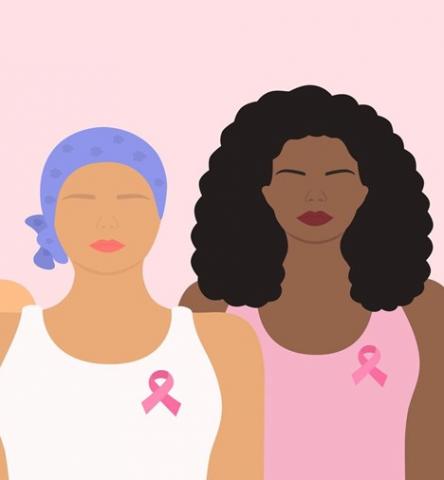
Le cancer est un adversaire qui n'impacte non seulement le corps du patient physiquement mais aussi sa santé mentale. Il est alors fondamental de cerner cette relation pour fournir de manière exhaustive les soins adéquats aux patients.
En plus des visites médicales continues, le parcours mené sous traitement est souvent embrouillé par des défis émotionnels et psychiques.
Les effets secondaires physiques du traitement, tels que les nausées, la fatigue, ou la perte de cheveux, peuvent profondément affecter le patient, l'image de soi et par conséquent sa qualité de vie, entraînant des sentiments de tristesse, de frustration, et de retrait social. De plus, l'incertitude entourant l'efficacité du traitement et ses complications potentielles peuvent considérablement alimenter le malaise mental, amplifiant le fardeau émotionnel des patients qui sont souvent menés à se débattre avec des questions existentielles sur la vie, la mort, et le sens de leur propre existence. L'impact psychologique du diagnostic n’affecte non seulement l’individu mais également ses proches, qui peuvent à leur tour éprouver une tourmente émotionnelle en naviguant différentes émotions tels que l’impuissance et le désespoir.
Survivre au cancer ne marque pas nécessairement la fin de la lutte pour préserver la santé mentale. De nombreux survivants se démènent notamment avec la peur de la récurrence, la culpabilité du survivant, et les difficultés d'adaptation alors qu'ils tentent de reprendre un train de vie normal. Son traumatisme laisse une empreinte durable sur le bien-être mental, se manifestant souvent sous forme d'anxiété ou de dépression chroniques nécessitant un soutien et une intervention mentale de longue durée.
En abordant ce sujet dans le secteur médico-psychologique, nous priorisons la mise en place de soins compatissants pour aider les individus à naviguer les complexités du cancer avec résilience, force, et espoir.
Bataille mentale complexe
Il y avait dans l’université un endroit pas comme les autres, un coin qui ne ressemblait pas à une salle de cours ni à un bureau sérieux. C'était plutôt un genre de salon d’âmes, un lieu où les gens venaient sans masque, sans devoir, sans avoir peur de dire qu’ils ressentent quelque chose. On l’appelait le Club Mentale, avec un e qui restait collé là comme une faute qui refusait de partir. Mais cette faute-là, elle disait vrai, parce qu’ici on ne corrigeait pas les douleurs. On les accueillait.
Quand on entrait dans la faculté, on sentait quelque chose. Pas une chose qu’on voit, mais une chose qu’on ressent dans le dos, ou dans la nuque, ou peut-être dans le cœur. Une sorte de magie pas bruyante, pas avec des étincelles, mais avec des regards, des chuchotements, des feuilles mortes qui tombent lentement entre deux pas. C’était l’université, mais c’était aussi autre chose. Un endroit où l’on pouvait respirer même quand on ne savait pas encore comment.
Le Club de la Santé Mentale faisait des activités qui n’étaient pas pour le CV mais pour l’âme. Des ateliers d’écritures avec des stylos cassés, des cercles où les gens parlaient ou pas, mais où leur silence avait autant d’importance que les mots. On n’y apprenait rien qui tombe dans les examens, mais beaucoup qui reste dans la poitrine. On ne fabriquait pas des savants, on réparait doucement des humains.
L’ambiance ressemblait à une famille qu’on choisit. Pas une famille parfaite, non, mais une famille qui écoute. On pouvait s’asseoir, dire n’importe quoi, ou même rien dire, et on n’était pas jugé. Ce n’étaient pas des camarades, c’étaient des compagnons de chute et de levée.
Ici, la santé mentale passait avant les notes. Avant les diplômes, il y avait les nuits d’angoisse. Avant les réponses exactes, il y avait les cœurs en désordre. Et ça change tout. Parce que quand quelqu’un te dit que ta douleur mérite autant de place que ta réussite, alors quelque chose se répare. Doucement. Lentement. Mais pour de vrai.
Et dans cette université, il y avait un peu de magie. Pas celle des contes, mais celle qu’on ressent quand une main frôle la tienne sans bruit, quand un regard te dit je comprends. C’est une université, oui, mais c’est aussi un sortilège ancien, qui transforme les larmes en lumière, et les absences en présence.
Un coin qui ne ressemblait pas à une salle de cours
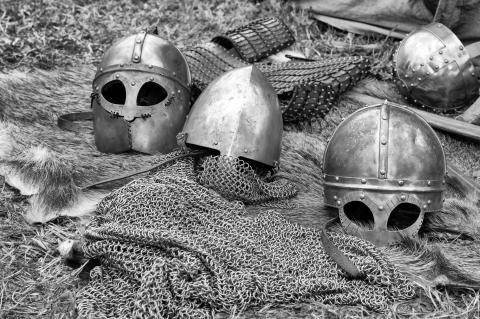
The importance of mental health during times of war is often overlooked, yet it plays a critical role in the recovery and well-being of both individuals and societies. War brings immense psychological strain on those directly involved, including soldiers, civilians, and refugees. The constant threat of violence, the trauma of loss, and the disruption of daily life create an environment ripe for mental health crises. Many issues, such as Post-Traumatic Stress Disorder (PTSD), depression, anxiety, and substance abuse, can become pervasive, often lasting long after the conflict ends. Addressing mental health during and after war is essential not only for individual healing but also for rebuilding stable and functioning societies.
For soldiers, the psychological impact of combat is undeniable. Indeed, the intensity of violence, the trauma of losing comrades, and the moral injuries associated with warfare can lead to long-lasting mental health issues. PTSD, for instance, is a common and debilitating condition that affects soldiers, often manifesting as flashbacks, nightmares, and emotional numbing. Unfortunately, the stigma surrounding mental health in military culture often discourages soldiers from seeking help, making it critical to develop supportive environments that promote psychological well-being alongside physical readiness. Addressing the mental health needs of soldiers is essential not only for their personal recovery but also for maintaining the resilience of military forces.
Moreover, civilians living in conflict zones are equally vulnerable to the psychological toll of war. The loss of family members, the destruction of homes and communities, and the constant fear of violence create a perfect storm for mental health issues. As a matter of fact, children particularly suffer tremendously in war-torn environments, with long-term effects on their emotional and cognitive development. Trauma can manifest in a variety of ways, from behavioral problems to depression and anxiety, often going unnoticed in the chaos of war. The lack of access to mental health care in conflict zones exacerbates these issues, and psychological support must become a priority in humanitarian aid efforts to mitigate the long-term impact of trauma on civilian populations.
As a future psychologist, I believe that addressing mental health in times of war is not only a critical issue but also a key area where psychology can make a profound impact. Psychologists must be at the forefront of providing trauma-informed care and creating interventions that acknowledge the unique experiences of individuals affected by conflict. Whether working with soldiers, civilians, or refugees, it is essential to adopt a holistic, culturally sensitive approach that addresses both individual suffering and the collective trauma of communities. In the aftermath of war, the psychological healing process is often as important as physical rebuilding. As a future psychologist, I am committed to contributing to this effort by developing strategies to support resilience, foster emotional recovery, and help those affected by conflict rebuild their lives.