


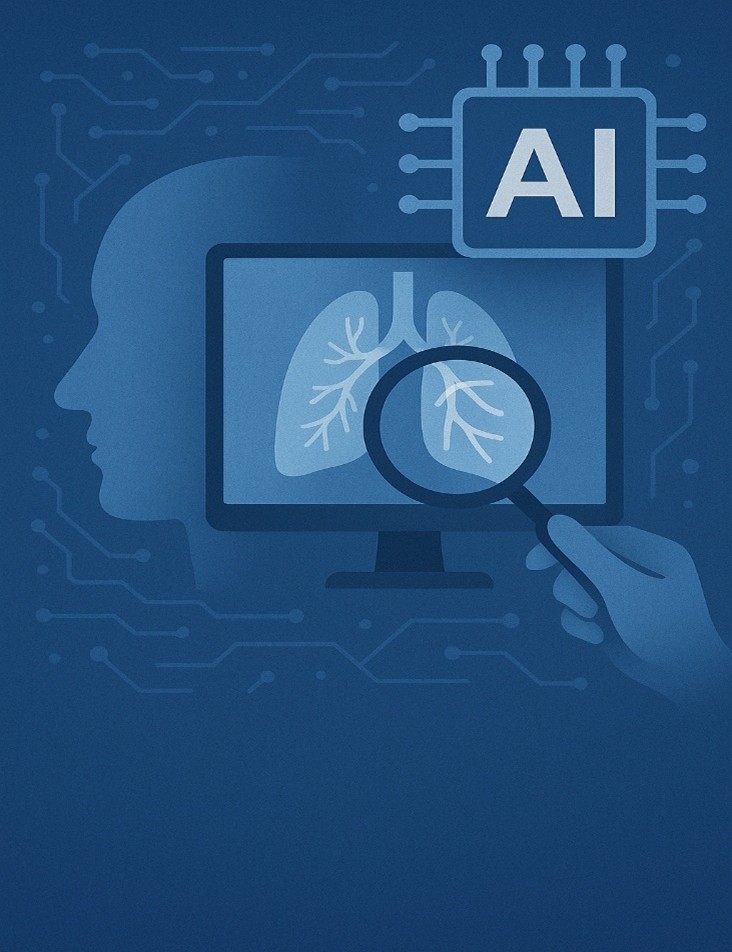
A decade ago, artificial intelligence in healthcare often referred to rule-based systems designed to mirror clinical guidelines: if a patient presents risk factor X combined with symptom Y, then diagnosis Z should be considered. These early expert systems were valuable because they were explicit. Clinicians could inspect their logic, challenge their assumptions, and trace each of their step in the reasoning process.
Today, a second paradigm dominates the field: data-driven machine learning. Instead of relying on hand-coded rules, algorithms learn patterns directly using massive datasets. Modern predictive medicine increasingly combines these two traditions: symbolic approaches that encode medical knowledge and numerical approaches that extract subtle statistical signals that go far beyond human cognitive capacity. This hybridization is now widely seen as the most promising path toward clinically meaningful artificial intelligence.
Prediction Is Not Diagnosis: Timing, Trajectory, and Triage
When clinicians speak of predicting disease, they rarely mean replacing diagnosis at the bedside. Rather, prediction concerns three critical dimensions: risk, trajectory, response. Risk prediction identifies individuals likely to develop a disease. Trajectory prediction anticipates how a condition will evolve. Response prediction estimates which patients are most likely to benefit from a specific intervention.
When designed appropriately, predictive models shift medicine upstream. Instead of reacting to complications once they occur, clinicians can intervene earlier, sometimes before symptoms appear. This shift from reactive to preventive care is one of the most transformative promises of artificial intelligence in medicine.
Medical Imaging: Where Prediction First Proved Its Value
The most convincing successes of AI-based prediction have emerged in medical imaging. In this domain, data are abundant, outcomes are well defined, and diagnostic patterns are often visual. Deep learning systems are trained on tens of thousands or even hundreds of thousands of labeled images to learn the complex visual signatures of diseases.
In diabetic retinopathy screening, deep learning models trained on retinal fundus images have demonstrated excellent performance in identifying patients requiring referral, enabling early intervention, and preventing vision loss. Similarly, in dermatology, convolutional neural networks trained on large datasets of skin lesion images have achieved performance comparable to expert clinicians in controlled evaluation settings.
Prediction Inside the Hospital: Learning from the Patient’s Digital Footprint
Beyond imaging, prediction increasingly relies on electronic health records, which capture laboratory values, vital signs, medication histories, and a large amount of free-text clinical notes. The challenge lies in transforming this heterogeneous, longitudinal data into actionable insights.
Deep learning models applied to electronic health records have demonstrated the ability to predict multiple clinical events across hospital systems. One prominent example is the prediction of acute kidney injury, where models trained on multi-institutional data can identify patients at risk, hours or even days before clinical deterioration becomes evident. Similar approaches have shown promise in anticipating sepsis in intensive care units, where early warning can be lifesaving.
Language Models in Medicine: Powerful but Not Truth-Aware
Large language models introduce new possibilities in predictive medicine, particularly for processing free-text data. They can summarize medical records, extract relevant information, and assist with documentation. However, their core limitation is critical: they generate statistically plausible text, not verified truth.
In medicine, this limitation is consequential. Confident but incorrect outputs may mislead users, especially in complex or highly specific clinical contexts. While medically adapted language models show promise in structured tasks such as question answering, their use in diagnosis or treatment planning remains limited. In high-stakes settings, these systems must be explicitly designed to express uncertainty and defer to human expertise.
Data Quality: The Hidden Bottleneck of Prediction
No predictive system can outperform the data on which it is trained. Medical data are often incomplete, inconsistently coded, and shaped by institutional practices rather than biological reality. Biases in datasets can lead to unequal performance across populations, exacerbating existing health disparities.
For this reason, data governance, continuous auditing, and post-deployment monitoring are essential components of safe predictive medicine. Ethical frameworks, such as those promoted by international health organizations, emphasize transparency, accountability, inclusivity, and the protection of personal data as prerequisites for trustworthy AI.
The future of AI-driven prediction does not lie in a single all-knowing system, but in coordinated ecosystems of tools. Imaging algorithms will flag subtle abnormalities. Clinical models will anticipate deterioration. Symbolic layers will align recommendations with medical guidelines. Interfaces will present uncertainty clearly, enabling informed decisions.
Success will not be measured by algorithmic accuracy alone, but also by real-world impact: fewer missed diagnoses, reduced avoidable hospitalizations, improved personalization of therapy, and more equitable access to care. At its core, predictive medicine is about detecting disease earlier, intervening sooner, and tailoring care more precisely Artificial intelligence can help fulfill this promise, but only if deployed with rigor, humility, and a clear recognition that responsibility for medical decisions must always remain human.