
 French
The Student Club Way to Integration
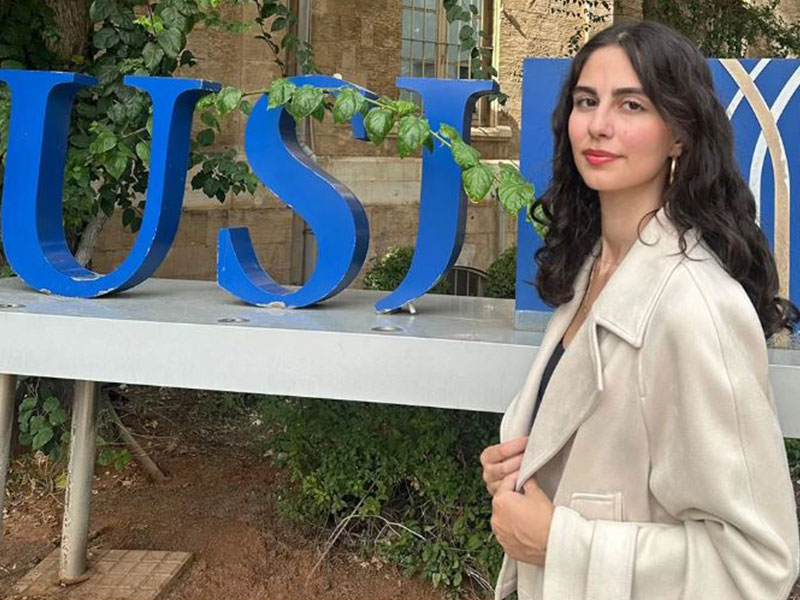
Tia Maria Akoury. Photo Maria Freifer
At Saint Joseph University of Beirut (USJ), cultural, professional, and civic clubs help students grow, build meaningful connections, and develop transferable skills that serve them throughout their journey.
L'OLJ / French text by Chantal EDDÉ, November 5, 2026
Adjusting to unfamiliar surroundings and finding a sense of belonging can take time, sometimes affecting a student's personal growth. For Gloria Abdo, Director of the Student Life Office (SVE) at USJ, a successful transition goes beyond academic achievement. “Students need to feel welcome, build connections, and develop a genuine sense of belonging to the USJ community.” Clubs play an important role in this process. As Abdo explains, they encourage learning, initiative, and a sense of responsibility through social interaction and shared experiences. Zoya Barakat, USJ Clubs Coordinator, emphasizes another aspect of student involvement: “Through clubs, students develop skills they may not necessarily acquire in the classroom.” First-year students can discover USJ’s clubs through recruitment campaigns and annual events organized by SVE, including Unifest, a highlight of the University’s calendar.

Tonia Barakat, a 21-year-old fourth-year mechanical engineering student, founded the Hiking Club to meet new people, experience university life differently, and bring students together around a shared passion. She never expected nearly 100 students to express interest at the club’s Unifest booth. Now its president, she reflects on how the experience changed her own involvement on campus: “I went from someone who barely participated in university life to someone who creates opportunities for others to connect.” Anar Nicolas, a third-year law student, took his first steps into campus life when he joined AGORA in his first year. “Being part of the conversation made all the difference,” he says of the club, which promotes freedom of expression and critical thinking among students. Tia Maria Akoury, 21, a fifth-year medical student and current president of the Lebanese Medical Students’ International Committee (LeMSIC), knows how much a student club can change the university experience. She joined in her first year, when the demands of medical school sometimes left her feeling isolated, and found the support she needed. Her first national general assembly, which brought LeMSIC members together from across Lebanon, marked a turning point. “I barely knew anyone, but the activities helped me overcome my shyness, reach out to others, and exchange ideas with medical students from different universities.”

Skills That Connect
Edmond Chakar, 22, a fifth-year computer and communications engineering student at ESIB and vice president of the IEEE Computer Society Club, once knew few students beyond his own class. At this year’s Unifest, presenting projects from USJ’s IEEE Student Branch made him realize how much he had changed from the shy student he was in his first year. “I can now approach new people with ease, present our initiatives confidently, and, most importantly, encourage other students to get involved.” More rewarding than his own personal growth, he says, is the chance to “support fellow students throughout their university experience.” Supported by SVE, USJ’s clubs help students build transferable skills that make it easier to adjust to university life. Farah Sleiman, 21, a fourth-year occupational therapy student, says leading the Inclusion Club has strengthened her leadership skills. The club promotes inclusion through educational, social, and cultural activities. “Leading a team, supporting its members, introducing new ideas, staying informed, and communicating effectively have also helped me express myself with greater confidence,” she explains.

As vice president of the IEEE Computer Society Club, Edmond Chakar has grown more confident, taken on greater responsibilities, and strengthened his communication, public speaking, event planning, leadership, and problem-solving skills, while learning to work effectively with people from diverse backgrounds. Tonia Barakat sees these skills as equally important, complementing her mechanical engineering studies and preparing her for her future career. For Anar Nicolas, 19, his first public speaking experience as AGORA’s vice president remains a defining memory. Addressing an audience during a panel discussion, he saw his confidence and leadership potential put to the test. “I had always believed in my ability to lead and speak with confidence. That moment was the culmination of how I had always seen myself.” AGORA also connects students across academic disciplines and political backgrounds, challenging Nicolas to deepen his knowledge, sharpen his reasoning and critical thinking, and learn to structure, question, and tailor his ideas to different audiences.

An Impact that Matters
Tonia Barakat knows how joining a club can change the way students interact with others. “During my first two years in the preparatory program at the North Lebanon Campus, I wasn't involved in campus life at all. When I transferred to the Science and Technology Campus, I wanted to change that. Founding the Hiking Club encouraged me to reach out to people, connect with students I didn't know, and take initiative.” For Farah Sleiman, the Inclusion Club opened up a wider social circle. “I've built new relationships, met inspiring people, and found greater fulfillment in my university experience. It also gave me a sense of belonging to a community where everyone has a place.” Edmond Chakar recalls being hesitant to join activities or speak up in his first year for fear of making mistakes. That has since changed. “I'm now much more open, confident, and comfortable interacting with others. I've learned to speak up, defend my ideas, work with people from different backgrounds, and take responsibility.” These experiences reflect what Zoya Barakat sees as an important part of student involvement: stepping outside one’s comfort zone and discovering abilities students may not have recognized in themselves. For those struggling to settle into university life, she believes that belonging to a group, working toward a shared goal, and knowing their contribution matters can improve their well-being. Tia Maria Akoury has experienced that sense of purpose herself. Seeing fellow students respond to her efforts with smiles, appreciation, and a desire to follow her example gives her “a sense of accomplishment” that carries into her studies. It also drives her to give her best and become the most competent doctor she can be.
Also read: Les Clubs étudiants, un tremplin vers l’intégration universitaire