


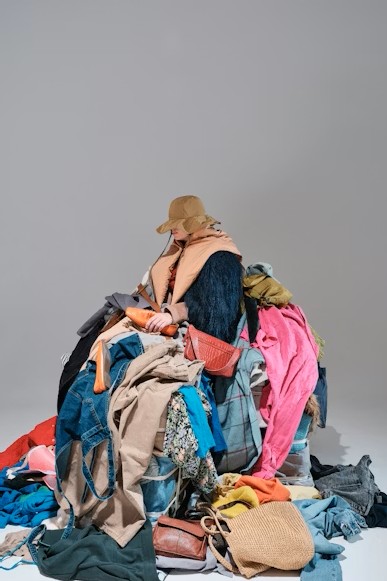
Micro trends, new styles, special collections, limited-edition drops; a never-ending consumerism cycle with little consumption.
It is no secret that fast fashion has become an imminent threat to the well-being of our environment, but are we fully grasping the reality of the situation, or simply going along for the sake of fitting in?
The statistics have spoken, and as of this year, the industry is worth an estimated 150.82 billion, mass-producing clothing by the minute to an audience whose sole interest is to participate in every trend. Not to mention the unbelievable prices at which these products come, and so, access to rapidly changing styles for cheap seems like the perfect combination! However, all that shines isn’t gold, and such ‘catches’ come at a higher price: a lasting damage to our ecosystem.
Unfortunately, the problem is not a lack of awareness, but rather one of acceptance. ‘Fast fashion is damaging’, people hear it all the time now, and environmental organizations have gone above and beyond by vocalizing their concerns. Nonetheless, it is easier said than done. The truth is, we see fast fashion everywhere, influencing our subconscious. After all, repetitive patterns do lead to compliance. These marketing tactics make resisting harder for those who are vulnerable when faced with an accessible item of clothing; convenience is a strong motivator for consumers.
The impact of fast fashion on the environment is now undeniable, and being a trend-led industry, we can imagine what happens with items that no longer fit the times. The landfills are full, loaded with the surplus of clothing companies throw out, and only a small percentage is somewhat recycled. Undoubtedly, to achieve such fast services, companies often use low-quality materials, microplastic-filled textiles, and unsustainable substances. Therefore, even if they were to be ‘properly’ discarded, their harmful effects would persist.
Furthermore, large-scale manufacturing causes even greater emissions of toxic gases and air pollution. According to recent studies, fast fashion companies are the second-biggest consumers of water and are responsible for around 10% of global carbon production. These numbers raise multiple questions surrounding environmental consciousness and the burden that our ecosystem bears in exchange for accessible, cheap, and trendy clothing.
Nowadays, the call for other shopping alternatives is on the rise, introducing upcycling, thrifting, and even buying local. If at least such eco-friendly practices could increase, it would, to some extent, balance out the demand for fast fashion. The lingering question remains: How far will this go on, and what will it take for people to snap out of this consumerism cycle?