

Baalbek, the city of the sun, is often approached through history, yet its true magic is expressed by its art. You do not need to go to museums to see it; it exists in the curve of a stone column, the shadow along an old wall, the memory of poetic voices long gone. Walking through Baalbek, you feel like its art is all around you.
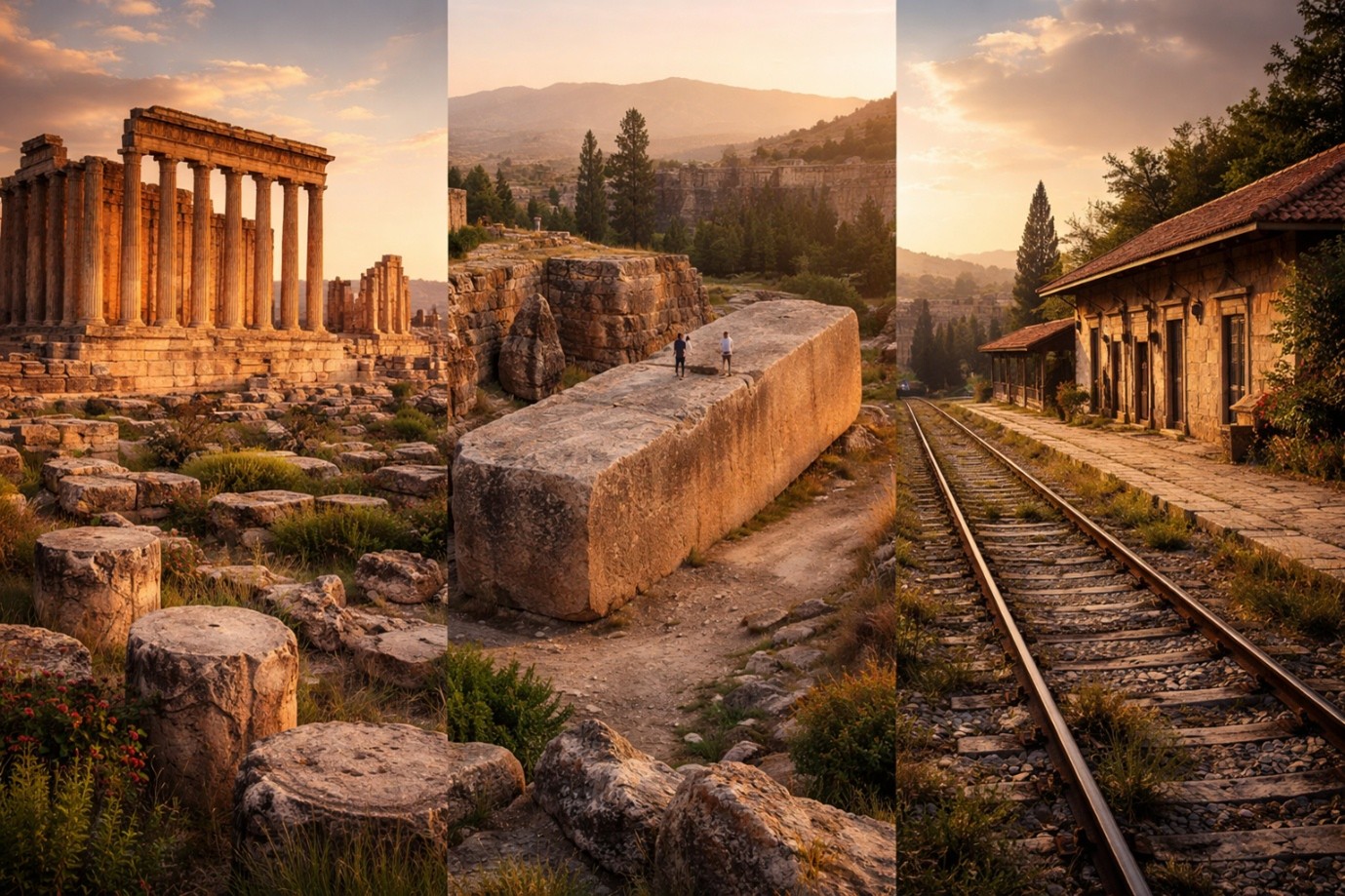
The Roman temples of Baalbek are amongst the strongest visual statements ever created. Their massive columns, precise proportions, and detailed cravings transform architecture into art. These monuments do more than represent the past, they continue to inspire painters, sculptors, photographers, and designers. And then there is the mysterious aspect of its creation: how were such enormous stones moved? Their scale, and their rhythm stops you to invite wonders.
“Hajaret el-Hibla” one of the most striking but underrated artistic symbols of Baalbek, sits unfinished in the quarry. This monumental stone carved but still connected to the ground, was never completed nor moved, frozen in time. Its size and stillness make it feel almost alive, creating a silent piece of art, and a dream captured in stones.
Beyond the temples and stones, the city itself carries an artistic language. Traditional houses built with arched doors and textured walls, reflecting a harmony between function and beauty. The house of Khalil Mutran, one of Lebanon’s most important literary figures, still stands in Baalbek as a symbol of intellectual and artistic heritage, linking city tradition to its visual landscape.
Hence, art quietly lives on, even through ruined train stations, that once connected the city of Baalbek and Beirut, and whose rails tell a story of movement, paused journeys through imagination and memories, inspiring poets, painters, and photographers.
In Baalbek art is everywhere, through its monuments and places, either frozen in time or active in memories. And if you take time to notice, it feels as if the city is speaking directly to your heart.