


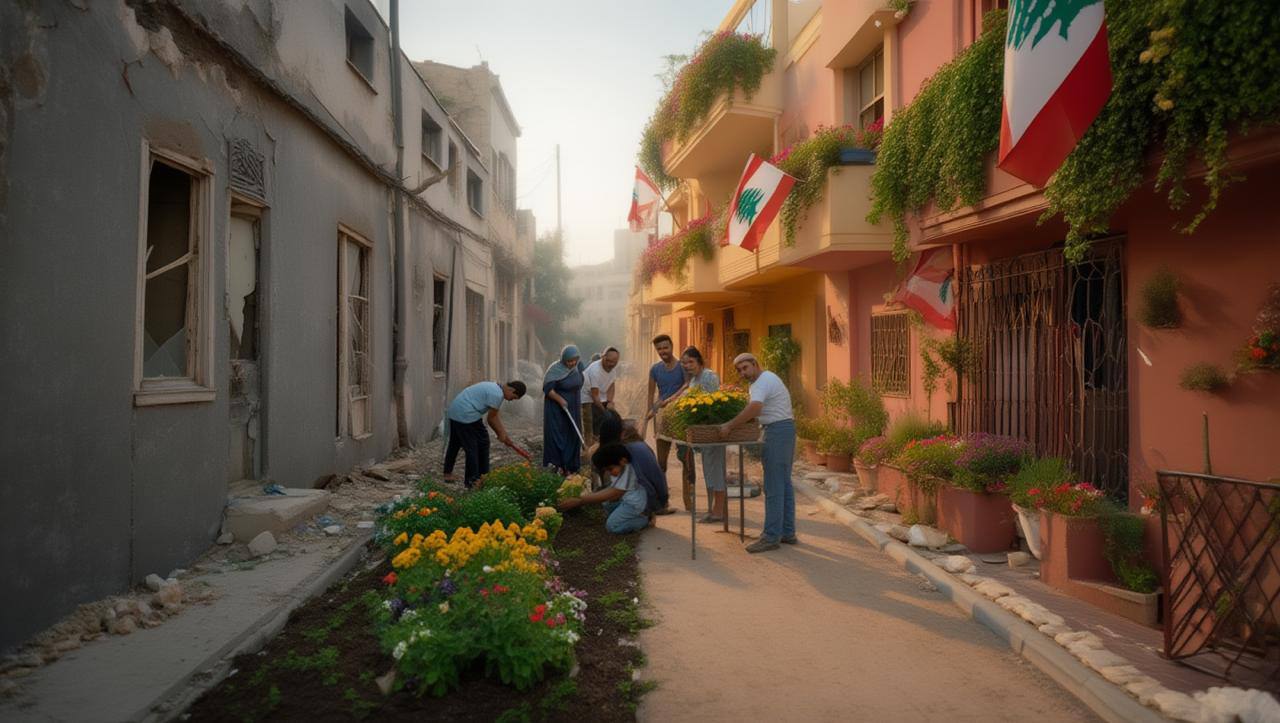
When you think of change, what comes to your mind? Growth? Progress? Lebanon’s journey has been one of resilience, adaptation, and hope. But the question remains: “Are we there yet?”
Growing up, I often heard stories from my parents and grandparents about Lebanon’s golden years; its thriving tourism, its vibrant cities, and, of course, its unforgettable celebrations and traditions. But today, as we face new challenges, I often find myself asking: “Are we truly on the path of change, or is it just an ongoing journey?” Lebanon is a land of beauty, history, and resilience. We’ve seen remarkable changes, but we still hold on to unshakable traditions. As I take you through Lebanon’s journey, I invite you to reflect on a powerful question with me: “Change, are we there yet?”
One of the biggest changes that impacted Lebanon and had a lasting effect was the shift in government structure. For thousands of years, starting around 3400 BC, we’ve been shaped by the influence of around thirteen different civilizations, from the Phoenicians to the Turks, the Egyptians, the Crusaders, the Mamluks...and finally the French, whose mandate began in 1920 and ended in 1943. On November 22, 1943, Lebanon gained its independence. We were blessed with brave people who fought for that change and the right to self-determination. This victory, though almost a century old, remains one of the most defining transformations in our history and highlights our resilience.
Another area that has seen changes, and still faces many challenges, is tourism. From the 1950s through the 1970s, Lebanon’s economy depended heavily on tourism. These were Lebanon’s golden years. We were even known as the “Switzerland of the Middle East.” However, the civil war from 1975 to 1990 shattered this prosperity, claiming countless lives and causing a steep decline in tourism. In the 1990s, Lebanon attempted a post-war revival, and tourism was reborn, especially thanks to the reconstruction of the downtown of Beirut. Despite obstacles such as the 2006 conflict, the 2019 economic crisis, and the 2020 Beirut blast, Lebanon’s tourism thrived but is now disrupted once more by the ongoing conflict that began in 2023.
However, not everything has changed, nor should it. Despite the impact of around thirteen civilizations, we’ve preserved something essential: resilience and a spirit of hope. We’ve also gained a rich heritage, and we take pride in our trilingualism, which amazes people worldwide. There are also the memories of Lebanon’s beauty, our historical sites, cuisine, traditions, and the festivals that bring us all together.
So, to answer the question: “Change, are we there yet?” Lebanon’s journey is complex, marked by both progress and enduring challenges. We’ve seen significant transformations in governance from colonial rule to independence and experienced the highs and lows of tourism. Yet, economic and political instability has limited the depth of our change. Beyond these challenges, there are the unshakable things: our resilience, enduring spirit, rich heritage, and traditions that define us. These are the anchors of our identity, our strength, and our pride.
So, are we there yet? The answer is not simple. While we continue to make strides, change remains a work in progress. It’s important to note that not all change is good, and some things shouldn’t change. As long as we hold on to our resilience, hope, spirit, and strength, which guided our ancestors, there is immense hope that Lebanon will move toward a brighter and better future.