
 French
USJ-CLS Students Driving Social Change
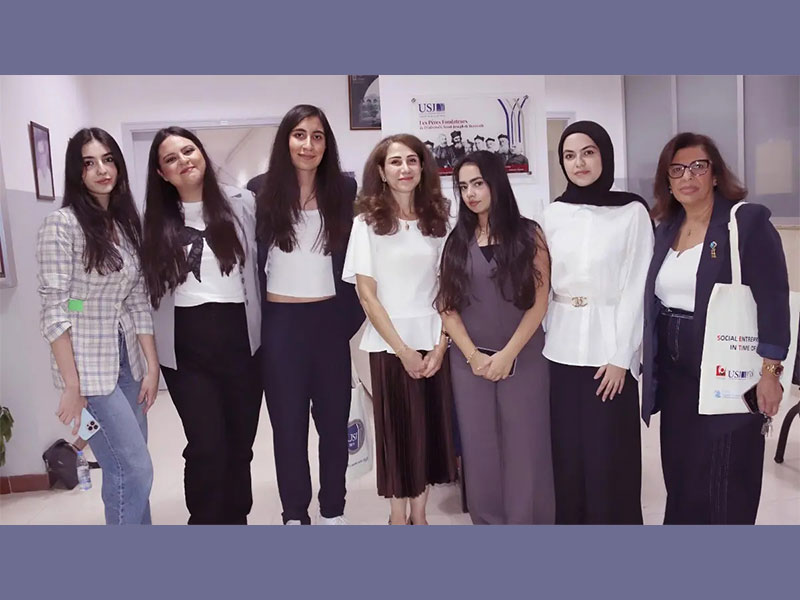
Saint Joseph University of Beirut’s (USJ) South Lebanon Campus – Rev. Fr. André Masse, SJ (CLS), concluded “From Ideas to Lasting Impact: USJ-CLS Students Driving Social Change,” a training program held as part of the EU-funded “Social Entrepreneurship in Times of Crisis” project.
The program trained 67 CLS students from diverse academic disciplines to develop practical solutions to community needs and social challenges. Divided into nine teams, they turned their ideas into nine projects designed to make a positive impact on society.
Supervised by CLS Director Prof. Dina Sidani, the training introduced students to social entrepreneurship and equipped them with practical skills. The program highlighted their potential to develop projects that benefit society and drive positive change, provided they receive the necessary support from civil society organizations, the private sector, and other stakeholders.
The closing ceremony at CLS in Bramieh, Saida, featured representatives from the business community, local government, civil society, and partner organizations. Among them were Omar Dandachli, Vice President of the Chamber of Commerce, Industry, and Agriculture in Sidon and South Lebanon, representing President Mohammad Hassan Saleh, with several board members; Saida Municipal Council member Ahmad Chouaib, representing Mayor Moustafa Hijazi; Ali Al-Abdallah, President of the Lebanese-Chinese Business Association; Sahar Jalaleddine Jubaili, President of Ahlouna Association; Sami Ghaddar, President of the Rotary Club of Saida; Ambassador Abdel Mawla Al-Solh; and Georges Ghanem, President of the CLS Alumni Association. NGO representatives, project partners, and participating students were also present.
Following the Lebanese national anthem, Prof. Sidani welcomed attendees and introduced the training program and its objectives. “At CLS, we see young people as more than future citizens. Their creativity can inspire action, fuel innovation, and make a difference in society today. This belief led us to launch an initiative centered on social entrepreneurship, creativity, and student engagement.”
Prof. Sidani stressed: “With Lebanon facing major economic, social, and institutional changes, young people must be empowered to innovate and find practical solutions to the challenges around them. Our role goes beyond preparing them for employment. We must also equip them to take initiative, lead meaningful projects, and contribute to the long-term development of their communities.”
She added: “As part of the Erasmus+ Social Entrepreneurship in Times of Crisis project, launched in 2024, CLS introduced an initiative to train students in social entrepreneurship and help them develop projects that address community needs. Through training sessions and group discussions, students learned to identify social challenges, devise innovative solutions, and turn their ideas into concrete proposals.”
“This experience revealed students’ ability to see their surroundings differently, think creatively, and develop innovative solutions to social challenges,” Sidani continued. She concluded: “The true measure of youth creativity is not the ideas they generate, but their ability to turn those ideas into meaningful, inclusive action that makes a lasting impact.”
The nine student teams then presented their proposals for lasting social change:
Next Level City, presented by Angela Akoum: Helps children with special needs reach their full potential through inclusive sports, education, and personal development.
AMAN, presented by Zahraa Loubani: An AI-enabled device that enhances child safety through GPS location tracking and smart security alerts.
STEPWISE, presented by Gaëlle Nehmé: Smart footwear designed to improve mobility, track physical activity, and support better health.
ICEPOP, presented by Tia Asmar: A dispenser offering flavored ice cubes, including mint, lemon, coffee, and fruit options.
Tima Aoun’s Project: A food waste reduction initiative that also makes meals more accessible and affordable for those in need.
Dabbirli, presented by Rafka Antoun: A digital platform that simplifies finding, comparing, and hiring trusted local home service providers while supporting local workers and small businesses.
Autisense, presented by Rayan Fleifel: A social enterprise developing affordable, customized sensory play kits to support autistic children’s sensory, emotional, communication, and learning development.
Anywear, presented by Nicole Constantine: An online marketplace for buying, selling, and renting secondhand clothing and accessories, with a dedicated clothing donation feature that supports people in need while promoting sustainability and social impact.
Beebed, presented by Kim Younan: A flexible temporary housing solution offering affordable, private, and sustainable modular rooms designed for quick installation and easy expansion.
Prof. Sidani highlighted the diversity of academic backgrounds as one of the program’s key strengths. Drawing on their skills, experiences, and perspectives in business management, data science, engineering, and special education, they worked together to develop high-impact solutions to social challenges.