 French
Cognitive Neuroscience in Support of Learning in the Age of AI
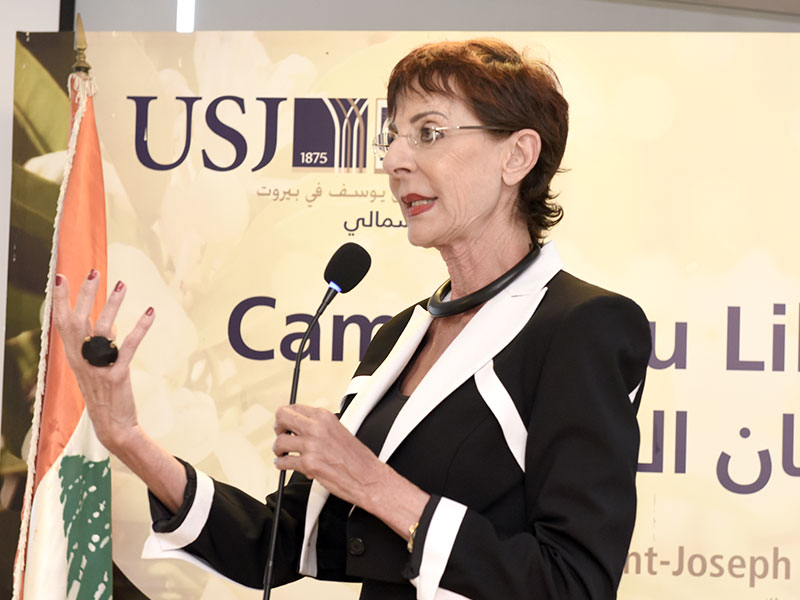
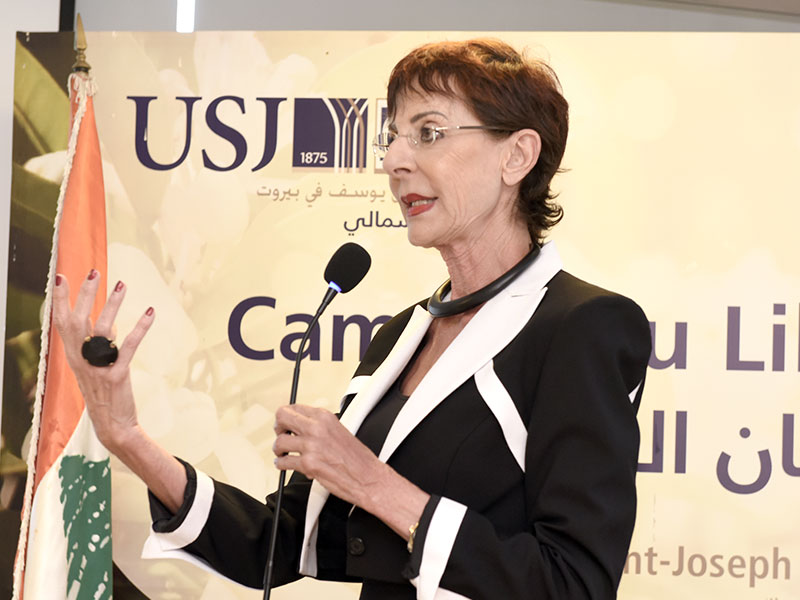
Professor Nada Moghaizel-Nasr, Honorary Dean, Delegate of the Rector of USJ and President of the Lebanese National Commission for UNESCO, gave a lecture on Monday, June 1, at the North Lebanon Campus of USJ, entitled “Cognitive Neuroscience in Support of Learning in the Age of AI.”
The conference brought together His Excellency Archbishop Youssef Soueif, Maronite Archbishop of Tripoli and its surrounding areas and President of the Archdiocesan Schools Network, Archbishop Youssef Nasr, Secretary General of the Catholic schools in Lebanon, Dr. Saba Zreik, President of the Al-Fayhaa Saba Zreik Cultural Foundation, as well as many directors of schools and institutions for people with special needs, educational officials, professors and friends of the University interested in education issues.
In her welcome speech, Mrs. Fadia Alam Gemayel, Director of the North Lebanon Campus, welcomed the participants, stressing that this conference is part of the University’s efforts to promote dialogue around the impact of artificial intelligence on education and teaching. She presented the academic and professional background of the lecturer Professor Nada Moghaizel-Nasr, adding that the large participation of educational institutions in this conference demonstrates the North’s attachment to Francophone culture. She also welcomed the new Rector of Saint Joseph University of Beirut, Professor François Boëdec, SJ, on the occasion of his first official visit to the North.
Addressing the audience, the Rector expressed his pleasure at meeting the University’s partners and friends of the University in the North, while welcoming Professor Nada Moghaizel-Nasr and saluting her important academic contributions.
Professor François Boëdec, SJ, reaffirmed the commitment of Saint Joseph University of Beirut to serve the Lebanese youth, particularly in the North, through quality academic programs, stressing that the theme of the conference is directly related to the programs offered on campus, in particular the sciences of education, data science, engineering and biochemistry, underlining the University’s will to prepare its students to face scientific and technological transformations.
He concluded by affirming the importance of considering artificial intelligence as a partner in the educational process and not as a substitute for human thought, recalling that true progress remains inseparable from the preservation of human values and the service of the individual.
The conference
Professor Moghaizel-Nasr introduced her conference by highlighting the strategic and decisive role of professors at a time when AI threatens to prevent the development of skills while the world needs an addition, rather than a dilution, of skills. She considered that it is a chance to teach at a time when challenges arise that lead to an in-depth questioning of teaching practices and when research informs us about the characteristics of the human brain, the mechanisms of learning and the impact of the use of AI.
She presented the characteristics of the brain and the pillars of learning, gradually outlining the pedagogical implications. Based on recent research on AI and the characteristics of the brain, and from the identified pedagogical implications, she proposed guidelines for the informed use of AI in education. In closing, she proposed leads for further reflection following the conference, highlighting the need for collective intelligence and the need to develop platforms for exchange and sharing of practices. She also said that northern Lebanon is fortunate to have such a network of schools, which is one of the levers of Lebanon’s identity.
Click here for more photos
Also read: Les neurosciences cognitives au service de l’apprentissage à l’ère de l’IA